
Drainage Solutions & French Drain Installation | Metro Detroit
Eliminate standing water, protect your foundation, and reclaim your yard. Engineered drainage systems designed for Southeast Michigan's clay soils and high water tables.
Water Goes Where You Direct It. Or Where It Wants.
Standing water in your yard is more than an inconvenience. It is an active threat to your foundation, your hardscaping, your plantings, and your ability to use your outdoor space. Left unaddressed, drainage problems compound with every rain event, every snowmelt, and every season.
Southeast Michigan presents a unique set of water management challenges. Our region's clay-dominant soil profile has extremely low permeability, meaning water sits on the surface and saturates the upper soil layer rather than draining naturally. Combine that with a high regional water table, flat grading on many residential lots, and aging municipal storm systems that back up during heavy rain, and you have the conditions for chronic yard flooding, basement seepage, and landscape erosion.
The Guy Outdoor Services has been solving drainage problems across Metro Detroit since 2006. We design and install complete water management systems that move water off your property efficiently, protect structural elements from hydrostatic pressure, and restore full use of your outdoor space.
Drainage Systems We Design and Install
Every drainage problem has a root cause. We diagnose that cause and design the system that addresses it specifically, not a generic one-size solution.
French Drains
The most effective solution for subsurface water collection. A French drain consists of a perforated pipe wrapped in filter fabric, installed in a gravel-filled trench below grade. Water enters the trench through the gravel, flows into the pipe, and is routed to a discharge point away from the problem area. We size the pipe diameter, trench depth, and gravel specification to match your property's water volume and soil conditions.
Yard Regrading
The most overlooked drainage solution and often the most effective. Many residential lots were graded correctly at construction but have settled over time, creating low spots and negative grades that direct water toward the foundation instead of away from it. We reestablish positive grade across your property using laser-guided equipment to ensure water flows predictably to the designated collection or discharge areas.
Downspout Extensions and Underground Routing
Your roof collects thousands of gallons of water during a single storm. When downspouts dump that volume directly at the foundation, it saturates the soil in the worst possible location. We connect downspouts to underground solid pipe that routes water 15 to 30 feet away from the structure, discharging to a pop-up emitter, dry well, or storm connection. This single improvement eliminates the most common cause of basement moisture in Metro Detroit homes.
Dry Creek Beds
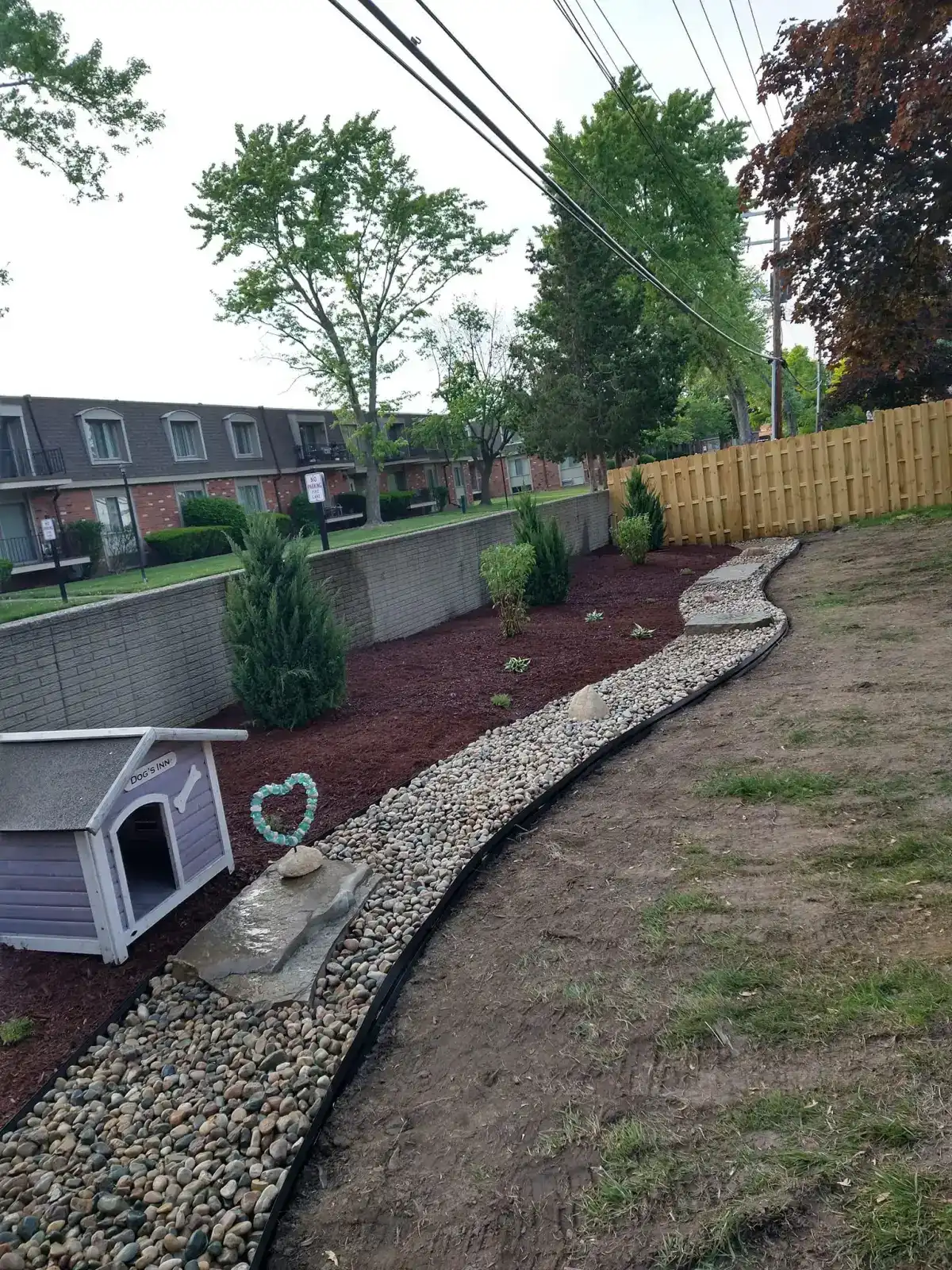
A dry creek bed is both a functional drainage channel and a landscape feature. Natural river rock and boulders are arranged to create an above-grade water conveyance path that handles surface runoff while adding visual interest to the landscape. Dry creek beds work exceptionally well in areas where underground drainage is impractical due to utility conflicts, tree roots, or shallow bedrock.
Sump Pump Discharge Lines
Interior sump pumps remove water from beneath your foundation, but that water needs somewhere to go. Surface discharge creates ice hazards in winter and erosion year-round. We install buried discharge lines that route sump pump output to a safe discharge point far from the structure, with a freeze-protected check valve to prevent backflow during Michigan winters.
Channel Drains and Catch Basins
Surface collection systems for driveways, patios, pool decks, and other hardscape areas where water pools on impervious surfaces. Channel drains intercept sheet flow across pavement and route it underground. Catch basins collect water at designated low points and connect to the subsurface pipe network. Both are essential components in any comprehensive drainage plan.
Why Michigan Drainage Is Different
Drainage contractors who learned their trade in sandy-soil regions routinely undersize systems for Metro Detroit conditions. Our clay soils, freeze-thaw cycles, and flat topography create a set of challenges that require region-specific expertise.
Clay Soil Permeability
Macomb and Oakland County soils are predominantly glacial clay with infiltration rates as low as 0.06 inches per hour. For comparison, sandy loam drains at 1 to 6 inches per hour. This means water that falls on your property stays on your property unless you provide a mechanical path for it to leave. Every drainage system we design accounts for this near-zero natural drainage capacity.
Freeze-Thaw Pipe Protection
Drainage pipes installed too shallow will freeze in Michigan winters, rendering the entire system inoperable during spring thaw when you need it most. We install pipe at a minimum depth of 12 inches and use rigid PVC or corrugated HDPE rated for freeze exposure. Pop-up emitters and discharge points include freeze guards to prevent ice blockage.
High Water Table
Many areas of Metro Detroit have seasonal water tables within 3 to 5 feet of the surface. During spring snowmelt and heavy rain periods, the water table rises further, saturating the soil and eliminating any remaining natural drainage capacity. Our systems are designed to operate effectively even when the water table is elevated.
How We Solve Drainage Problems
Diagnosis
We visit your property during or shortly after a rain event whenever possible. Observing live water flow patterns reveals the true source of the problem, which is often different from where the symptoms appear. We also review your lot grading, downspout locations, utility map, and soil profile.
System Design
Based on the diagnosis, we design a system that addresses all identified water sources. You receive a plan showing pipe routes, trench locations, discharge points, and any grading corrections. We size every component to handle peak storm volumes, not just average conditions.
Installation
We excavate trenches, install pipe at the correct grade and depth, backfill with drainage aggregate, and restore the surface. Underground utilities are marked before any digging. Sod, seed, or mulch is applied to restored areas so your yard looks clean when we leave.
Testing and Verification
Before closing trenches, we flush every pipe run with water to verify flow rate and confirm discharge at the outlet. After backfill and grading, we test the surface grade to ensure positive drainage across the entire project area. You do not pay for a system until we have proven it works.
Drainage FAQ
Regrading solves surface water flow issues where the ground slopes incorrectly. French drains solve subsurface water problems where water saturates the soil below the surface. Many properties need both. During our site assessment, we identify whether the problem is surface flow, subsurface saturation, or a combination, and recommend the appropriate solution for each.
Water is routed to an approved discharge point. Options include a pop-up emitter in a lower area of your yard, a dry well that allows gradual percolation, a connection to the municipal storm sewer (where permitted), or a daylight outlet at the property boundary. We select the discharge method based on your lot layout, local codes, and the volume of water being managed.
French drain installations typically range from $3,000 to $12,000 depending on the length of the run, depth, access conditions, and discharge method. A simple 30-foot perimeter drain is at the lower end. A full-property system with multiple collection points, long discharge runs, and grading corrections is at the higher end. We provide detailed written estimates after the site assessment.
Exterior drainage improvements resolve the most common causes of basement moisture: surface water flowing toward the foundation, downspout discharge at the foundation wall, and saturated soil creating hydrostatic pressure against the basement walls. For homes with cracks in the foundation or interior water entry below the floor slab, interior waterproofing may also be needed. We assess the full picture and refer to a waterproofing specialist if interior work is required.
Most residential drainage projects are completed in 1 to 3 days. A single French drain run with downspout connections can be done in a day. Larger projects involving full-property regrading, multiple drain lines, and surface restoration may take up to a week. We provide a timeline estimate with every proposal.
Services That Complement Drainage
Retaining Walls
Retaining walls and drainage systems work together. Walls manage grade changes while drainage handles the water behind them.
Learn MoreLandscape Design & Build
Incorporate drainage into a complete landscape renovation. We design systems that are invisible once the landscape is finished.
Learn MoreLawn Care & Maintenance
A healthy lawn starts with proper drainage. Standing water kills grass faster than drought, disease, or neglect combined.
Learn MoreStop Fighting Water. Start Managing It.
Contact us for a drainage assessment. We will identify the source of the problem, design the right solution, and give you a clear cost and timeline before any work begins.